
The government's actions to facilitate the creation of collective agreements in the general labour market
News
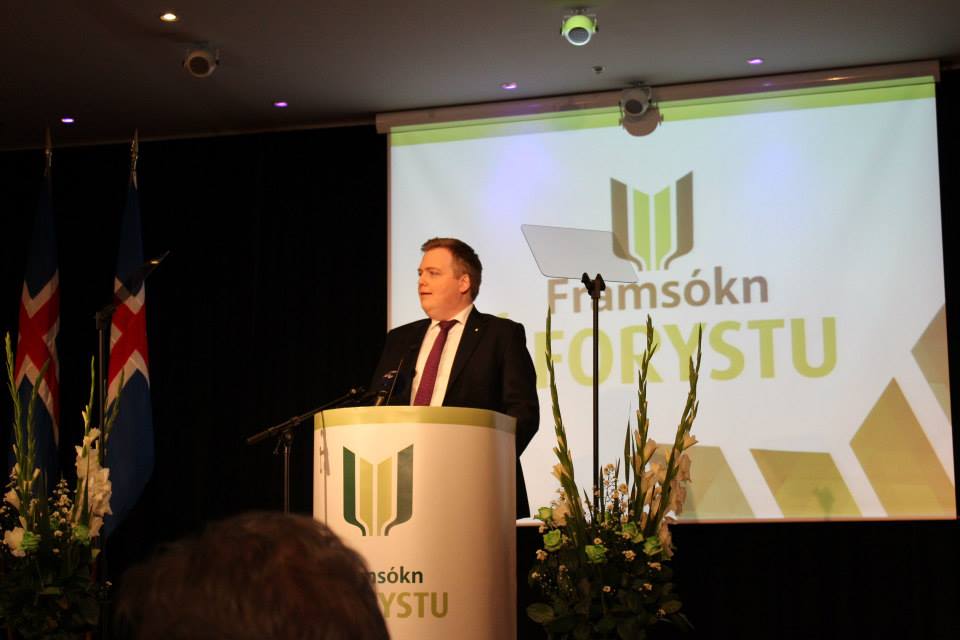
The Government of Iceland approved today measures related to the formation of collective bargaining agreements in the general labour market. The actions consist of 11 items and relate to various areas of tax, welfare, and housing issues as well as improvements in the field of economic management and public finances. An important prerequisite for the government's measures is that collective bargaining agreements in the general and public markets do not lead to instability in economic affairs. The government's actions are based on the understanding that the planned agreements in the general labour market specifically consider those with the lowest incomes and that the minimum wage will increase to 300,000 krónur during the contract period.
Measures in 11 items regarding collective bargaining agreements
Changes in income tax will lead to an increase in the disposable income of all wage earners
Total reduction in individual income tax during the term of office amounting to up to 16 billion
Campaign for the construction of 2300 social apartments
Support for low-income tenants and those buying their first apartment
Increased collaboration with labour market partners through the establishment of a national economic council
The government will, among other things, advocate for changes in the income tax for individuals which will lead to an increase in the disposable income of all wage earners, particularly for middle-income groups. For example, the disposable income of about 65% of full-time wage earners will increase by 50,000 or more per year, and the disposable income of wage earners with average incomes will increase by almost 100,000 per year. The changes will also lead to the simplification of the income tax system and increased transparency and efficiency, with the number of tax brackets reduced from three to two. Furthermore, the personal tax credit will increase in line with price changes.
With these measures, the total reduction in individual income tax will therefore reach about 16 billion krónur during the term of office. This corresponds to nearly 13% of the state's revenue from individual income tax according to the 2015 budget estimate.
The government also commits, in cooperation with the Association of Local Authorities in Iceland and partners in the labour market, to create better conditions for the development of the housing market. This will promote the increase of affordable and cost-effective apartments with the aim of ensuring that low-income families have access to rental housing for the long term, and a campaign will be launched for the construction of 2,300 social apartments during the period of 2016-19.
It will also be promoted to reduce construction costs, including a review of building regulations and local government fee structures. Housing benefits will be increased to support the general rental market and reduce housing costs for low-income tenants, and tax legislation will be changed to lower rental prices and increase the supply of the rental market. Additionally, specific measures will be taken to assist those purchasing their first apartment, including allowing young people to use their personal pension savings for this purpose. Efforts will be made towards these objectives in a consultative group consisting of representatives from the state, municipalities, and all parties in the labour market, taking into account the existing work of the authorities on reforms in the housing market and ideas that have arisen in the consultative group.
In order to improve the interplay of public finances, monetary policy, and the labour market, the government expresses its willingness to establish a special national economic council, where membership will consist of the heads of the government and representatives from the Central Bank, municipalities, and labour market representatives.
Other measures relate to the equalisation of the disability burden of pension funds, the elimination of tariffs on clothing and shoes, reduction of patient costs, increased contributions to continuing education and vocational training, initiatives against tax evasion, simplification and review of regulations and oversight of economic activities, policy-making in public finances, and cooperation on shaping labour market policy and the organisation of labour market issues.
Statement from the government on measures to facilitate the formation of collective bargaining agreements:
The government is willing to facilitate the establishment of collective bargaining agreements that do not pose a threat to stability in economic matters. It is important that the outcomes of collective bargaining negotiations, along with the impacts of the measures that the authorities advocate in connection with them, contribute to the Central Bank of Iceland being able to maintain its inflation target. Therefore, it is a prerequisite for the government's measures that collective bargaining agreements in the general and public labour markets do not lead to instability in economic affairs.
This memorandum outlines direct financial measures taken by the authorities in specific areas of tax and welfare matters, and improvements in economic management and public finances.
I. Income Tax. The government will advocate for changes in income tax for individuals that involve a lower tax burden on general wage income. These changes also aim to simplify the income tax system, achieve more efficient tax implementation, and increase transparency regarding marginal effects.
To this end, the number of tax brackets will be reduced from three to two in two stages. The tax percentage in the lower bracket will be reduced from 22.86% to 22.68% from the beginning of 2016, and to 22.50% from the beginning of 2017. The rate in the middle bracket will be halved from the beginning of 2016 (to 1.22%) and completely eliminated by the end of that year. The difference between tiers in the two-tier system will be 9.30% when the changes are fully implemented. It is anticipated that the amount limits for the highest bracket will be lowered to 770,000 krónur by the end of 2015 and that the boundary between the two brackets will be at 700,000 krónur when the changes are fully carried out. These amounts are subject to changes in the wage index.
The personal tax credit will be raised in line with price changes.
The direct loss of state revenue resulting from the aforementioned decisions is estimated at approximately 9-11 billion krónur when the changes are fully implemented. As a result, it is not assumed that there will be room for a reduction in the insurance contribution as has previously been under consideration. For the same reasons, the municipalities' share of income tax (municipal tax) will be reviewed in consultation with local authorities.
The total reduction in individual income tax will thus amount to about 16 billion krónur during the period 2014-2017, which corresponds to nearly 13% of state revenue from individual income tax based on the 2015 budget estimate.
There is a general reservation on the latter phase of these changes, which will only be implemented if it can be deemed reasonable considering the development and outlook for economic affairs as they will be assessed around mid-2016.
It is aimed to legislate the aforementioned changes in the autumn session.
II. Housing Issues. Reference is made to a special statement from the government in cooperation with parties in the labour market and municipalities from 28 May 2015 regarding housing issues, where the goal is to increase the availability of affordable and cheap apartments, support for the rental market and the purchase of first apartments, and ensure increased supply of residential housing according to the measures which are detailed in the statement. The measures outlined in the statement primarily aim to improve the situation of low-income families and young people in the housing market. Thus, low-income families, which until now have not had access to housing in the social system of local authorities, will be granted access to affordable and secure rental housing. III. Equalisation of the disability burden of pension funds. The authorities will advocate for the withdrawal of the decision to reduce the state contribution for the equalisation of the disability burden of pension funds. This decision is linked to plans for changes in the insurance fee. Continued equalisation of the disability burden of pension funds is crucial, but it is desirable to find a scheme based on clear objective criteria that is sustainable and not dependent on budgetary contributions. IV. Elimination of tariffs on clothing and shoes. The government will advocate for the elimination of tariffs on clothing and shoes by the end of 2015 in order to increase the disposable income of households and promote increased trade in Iceland. V. Patient costs. The government is working on a new comprehensive participation payment system in the healthcare sector. Necessary analytical work is now being conducted with the aim of protecting those patients who pay the most and setting an upper limit on costs for those who require significant services. VI. Continuing education and vocational training. Funding will be ensured to follow up on the joint priorities of educational authorities and parties in the labour market regarding ensuring the operation of adult education centres and learning opportunities for students over 25 years of age, improving conditions for workplace training with regular and increased contributions to vocational training funds, and starting work on defining the level of vocational education and how it might connect both to continuing education and higher education systems. Increased contributions in the budget for these priorities will amount to 200 million krónur annually. VII. Tax evasion. An initiative will be undertaken by the Ministry of Finance and Economic Affairs, the Directorate of Internal Revenue, municipalities, ASÍ, and SA to combat black market activities and ensure increased revenues for the public sector through improved tax compliance. Such an initiative is also intended to promote increased equality in competitive business. VIII. Oversight of economic activities. The government reaffirms its commitment to review legislation that impacts the labour sector with the goal of simplification and increased efficiency. The aim is to reduce regulatory burdens and simplify interactions with public authorities. This aims to reduce costs for businesses, increase productivity in the economy, improve its competitiveness, and promote increased purchasing power. The government will establish a working committee tasked with drafting proposals for changes in legislation aimed at unifying oversight authorities, reviewing licensing processes, and supervision of economic activities. IX. Labour market measures. In connection with the government's statement from 15 November 2013 regarding the formation of collective bargaining agreements in the general labour market, a committee has been working under the Ministry of Social Affairs and Housing on shaping labour market policy and organizing labour market issues. The government will promote that certain projects related to this policy formulation will be initiated in cooperation with labour market partners and allocate the necessary resources for this, up to 25 million krónur annually. X. National Economic Council. The proposals from the Consultation Group on increased prosperity stipulate that the interplay of public finances, monetary policy, and the labour market needs to be improved if favourable conditions for economic growth are to be achieved. The government expresses its willingness for such a National Economic Council to be established. Members of this council will include the heads of government at any given time (currently the Prime Minister and the Ministers of Finance and Economic Affairs) and representatives from the Central Bank of Iceland, the Association of Local Authorities in Iceland, the Confederation of Icelandic Employers, the Icelandic Confederation of Labour, and a joint representative of employee associations in the public labour market. The role of the National Economic Council will be to provide a comprehensive assessment of the state of economic affairs at any given time, considering the three aforementioned main pillars of economic management and assess the scope for wage adjustments in the labour market. The National Economic Council does not make decisions on economic matters, and its establishment does not change the legally mandated roles of the parties involved. XI. Policy-making in public finance. The draft law on public finances contains important innovations regarding policy-making on public finance and is intended to promote good economic management and better governance of public finances, including closer cooperation between the state and municipalities. The government considers it important that in the preparation of the financial plan presented to the Parliament each spring according to the draft, consultation with labour market parties is conducted. This consultation will be formalized in cooperation with employer and employee associations.
Statement from the government on housing issues:
The Government of Iceland, in cooperation with the Association of Local Authorities in Iceland, the Icelandic Confederation of Labour, the Federation of State and Municipal Employees, the Federation of University Students, the Teachers' Association of Iceland, and the Confederation of Icelandic Employers, commits to creating better conditions for the development of the housing market. Efforts will be made to ensure that citizens have increased choice regarding housing forms and experience greater security in housing matters in accordance with individual needs, particularly low-income families. The government declares that it will initiate discussions with the Association of Local Authorities in Iceland, the City of Reykjavik, and other municipalities with the aim of implementing the following measures:
1. Increase the number of affordable and cheap apartments
A foundation will be laid for a new social rental housing system, where the emphasis will be on increasing affordable and cheap apartments to ensure that low-income families have rental housing for the long term. The social rental system will be financed through state and municipal capital contributions and direct interest subsidies from the state, amounting to present value of approximately 30% of the construction costs. Such contributions from the state and municipalities should generally result in the rent for individuals with low income not exceeding 20-25% of their income. Legal entities that intend to build and operate social rental housing may include municipalities and non-profit associations with the long-term goal of building, owning, and managing rental housing intended solely for tenants within certain income and asset limits. Restrictions will be set on how apartments can be removed from the social rental system, with provisions concerning the allocation of sale proceeds.
A campaign will be launched to construct social rental apartments. It aims to build 2,300 apartments in the next four years, i.e. from 2016 to 2019, with a maximum of 600 apartments per year. After that, the need for continued development of social rental housing will be assessed, taking into account the status of public finances. The focus will be on apartments of moderate size and ensuring social integration in rental apartments.
It will be aimed that the incomes of residents will be in the lowest two quintiles when moving into the housing. Thus, low-income families, who until now have not had access to apartments in the social system of local authorities, will be provided access to affordable and secure rental housing. No changes are expected to the current prioritisation of municipalities regarding clients of social services or prioritisation regarding student apartments, but particular focus will be given to low-income families and households in significant financial distress in further prioritisation for housing allocation to working people. There will be rules regarding how the total number of approved social apartments will be distributed among different target groups and implementing bodies.
2. Increase the supply of housing and reduce construction costs
The public sector will do everything possible to facilitate the adoption of the most cost-effective methods for apartment construction in order to reduce construction costs. A review of building regulations is included among these, as well as planning laws.
In the review of building regulations, a new category of constructions will be added that will be exempt from the provisions of regulations on universal design. There, particular focus will be placed on smaller and cheaper apartments.
Fees charged by municipalities for plots and road construction will be reviewed with the aim of reducing construction costs.
3. Support for the general rental market
To further lower housing costs for low-income tenants, housing benefits will be increased in 2016 and 2017. The baseline amount and income disregard will be increased in line with proposals that have been under consideration by the authorities. Housing benefits and disregard limits will be based on the number of household members.
Taxation of rental income from properties owned by individuals will be changed in order to lower rental prices and increase the supply of rental apartments.
Special legal provisions will be aimed at companies to encourage long-term rental agreements and thus improve housing security in the general market.
4. Support for purchasing a first apartment
Support will be provided for those buying their first apartment. Saving will be encouraged by allowing those who have saved a specified maximum percentage of their income for a certain time to withdraw their savings tax-free, for example, allowing young people to use their personal pension savings as equity when buying their first apartment. It is essential that the amount of interest support and reduction provisions primarily assist families below average income.
Special laws will be introduced regarding mortgage loans for consumers, giving lenders the flexibility to consider more factors than just the outcome of income assessments when deciding on loans.
Efforts will be made towards these goals in a consultative group consisting of representatives from the state, municipalities, and all parties in the labour market, with regard to the existing work of the authorities on improvements in the housing market and ideas that have arisen in the consultative group. The aim is that a bill on housing benefits will be presented to the spring session of 2015 and that other bills necessary for achieving these goals will be submitted in the autumn session of 2015 and passed before the new year.
Work will continue towards a reformed financing structure for general housing loans. In this respect, proposals from the project management regarding the future organisation of housing matters, a new EU mortgage directive, and data on the operational conditions of new housing loan companies and the position of the Housing Financing Fund will be taken into account.


